Transformation
PBICT and SITA Chart a New Path towards an Inclusive and Transformed ICT Sector
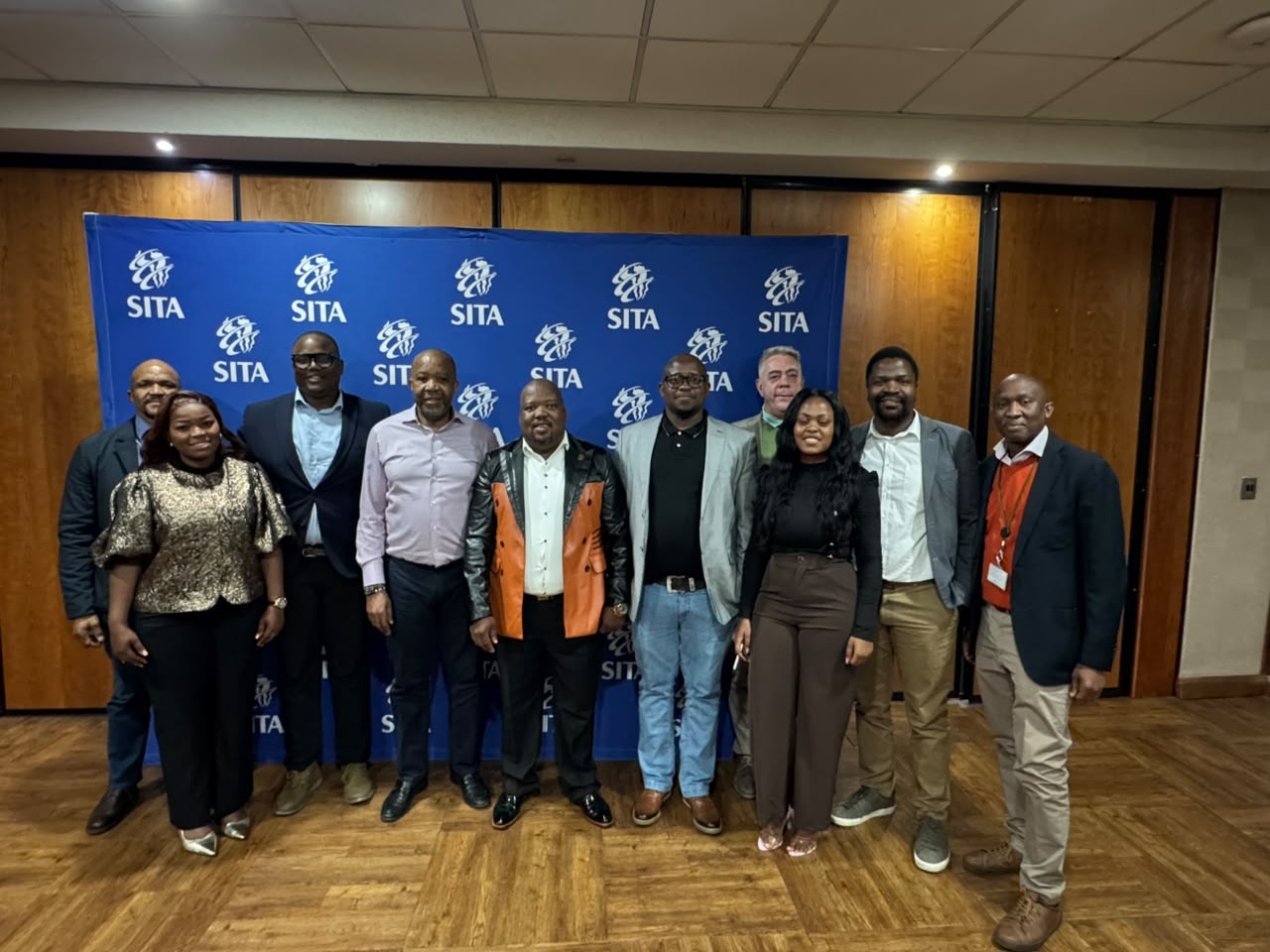
The Progressive Blacks in ICT (PBICT) recently held a strategic engagement with the leadership of SITA to discuss transformation, black-owned ICT enterprise participation in public procurement, localisation, innovation, and South Africa’s digital sovereignty.
The Progressive Blacks in ICT (PBICT) recently held a strategic engagement with the leadership of the State Information Technology Agency (SITA) led by the new Managing Director Mr Magatho Mello to discuss the transformation of the ICT sector, the participation of black owned ICT enterprises in public procurement, localisation, innovation and South Africa’s digital sovereignty.
The PBICT delegation was led by President Welcome Magagula, National Chairperson William Ledwaba, Secretary General Luvo Grey, and Deputy Chair Jacky Mokakabi together with other members of the organisation’s national and provincial leadership.
The engagement formed part of PBICT’s broader programme to build constructive relationships with institutions that play a central role in shaping South Africa’s digital economy and government technology procurement.
Procurement reform and access for ICT SMMEs
PBICT raised serious concerns regarding the challenges experienced by small, medium and micro enterprises when attempting to participate in SITA procurement opportunities. These challenges include delays in establishing new transversal panels, inconsistent procurement outcomes, complex compliance requirements and the continued use of long-term contracts that can effectively exclude emerging suppliers from the market.
PBICT highlighted that delays of up to two years in appointing replacement panels have placed many ICT SMMEs in an untenable position. Companies that were not included on an existing panel may be prevented from accessing government opportunities for several years, regardless of their capabilities, transformation credentials or the innovative solutions they offer.
The organisation proposed that SITA and the relevant government departments reconsider the current transversal panel model. Instead of requiring suppliers to wait until a panel expires, qualifying companies should be allowed to apply, undergo validation and be added to panels on a continuous basis. Such an approach would broaden participation, encourage competition and ensure that government has ongoing access to capable and innovative suppliers.
PBICT further emphasised the need for transparent, consistent and predictable procurement decisions. Transformation cannot be achieved if procurement systems continue to favour established suppliers while imposing disproportionate administrative and financial burdens on smaller black-owned businesses.
Localisation and support for South African innovation
The meeting placed significant emphasis on the need for SITA to use its position in government procurement to support locally developed technologies and intellectual property. South African innovators frequently struggle to secure the certification, validation and institutional trust required for their products to be adopted by government. In many instances, local companies are expected to compete against multinational original equipment manufacturers that possess significantly greater financial resources and established relationships within the public sector.
PBICT called for a clear localisation strategy that creates credible pathways through which locally developed products can be tested, validated, approved and introduced into the government market. SITA has an important role to play in building confidence in South African technologies and ensuring that local entrepreneurs are not permanently relegated to the role of resellers, installers or subcontractors for multinational companies. Government technology expenditure must contribute towards building South African intellectual property, manufacturing capacity, technical expertise and sustainable black-owned enterprises.
A firmer transformation framework for OEMs
PBICT also called for stronger transformation and supplier-development obligations for original equipment manufacturers doing business with SITA and the South African government. Transformation commitments must extend beyond once-off training initiatives and general statements of intent. OEMs should be required to demonstrate measurable investment in black-owned ICT enterprises, local skills development, technology transfer, enterprise development and the creation of opportunities for South African suppliers.
The meeting agreed on the importance of continuing engagements with OEMs and establishing clear compliance expectations for companies seeking to benefit from public-sector technology expenditure. PBICT believes that OEM relationships must be structured in a manner that develops local industry rather than perpetuating dependency on foreign technology and intellectual property.
Payment terms must support smaller suppliers
The parties also discussed the financial pressures experienced by SMMEs participating in government contracts. PBICT emphasised that payment terms should be separated from the duration and broader conditions of contracts. Smaller suppliers cannot be expected to finance government projects for extended periods while waiting for invoices to be processed. Late payments threaten jobs, weaken operational capacity and, in some instances, cause otherwise viable businesses to collapse. Procurement transformation must therefore include practical measures to improve payment processes and protect the cash flow of qualifying SMMEs.
Data sovereignty and South Africa’s AI future
Data sovereignty emerged as another critical area of discussion. PBICT stressed that South Africa must retain appropriate control over government and citizen data and should develop the infrastructure and institutional capability required to store, manage and protect strategic information within the country. The parties discussed the potential decentralisation of data-centre infrastructure and the need to ensure that South Africa’s approach to cloud computing, artificial intelligence and digital public infrastructure advances national development objectives.
South Africa cannot be a passive consumer in the global artificial intelligence economy. The country must develop its own capabilities, support local innovators and ensure that its data contributes to building domestic economic and technological capacity. A distinctly South African approach to AI must be grounded in sovereignty, inclusion, local languages, local intellectual property and the developmental needs of the country.
Re-establishing structured industry engagement
PBICT proposed the re-establishment of a dedicated industry transformation mechanism within SITA to monitor transformation, engage organised industry and regularly assess whether procurement expenditure is creating meaningful opportunities for black ICT enterprises. The organisation further proposed the creation of an ongoing forum through which industry bodies, suppliers and innovators can provide input on procurement reform, pricing, localisation, compliance and supplier development.
The meeting recognised that transformation cannot be treated as a once-off consultation. It requires institutional leadership, reliable data, measurable targets and continuous engagement with the businesses and communities affected by procurement decisions.
Agreed way forward
The engagement concluded with agreement on the need for a further half-day strategic session ahead of GovTech. The proposed session will bring together PBICT, SITA’s leadership, supply-chain management representatives and technology teams. The session will provide an opportunity to examine practical proposals relating to:
- Reforming the transversal panel system;
- Expanding access to opportunities for black-owned ICT SMMEs;
- Developing a comprehensive localisation strategy;
- Strengthening OEM transformation and compliance requirements;
- Improving payment arrangements for smaller suppliers;
- Supporting locally developed products and intellectual property;
- Advancing data sovereignty and South Africa’s participation in artificial intelligence;
- Developing a digital marketplace for government technology procurement; and
- Establishing a clear roadmap for structured industry engagement.
PBICT welcomes SITA’s willingness to engage openly on the challenges confronting the sector and to consider practical solutions. The organisation will continue advocating for a public procurement system that is fair, transparent and capable of producing meaningful economic transformation across all nine provinces.
The transformation of the ICT sector will not be achieved through policy commitments alone. It requires deliberate procurement reform, accountable institutions and measurable opportunities for black-owned businesses. PBICT remains committed to working with SITA, government, industry and local innovators to build an inclusive, sovereign and globally competitive South African digital economy.