Digital Skills
PBICT Welcomes Renewed Engagement with SITA on ICT Transformation and SMME Participation
11 September 2026
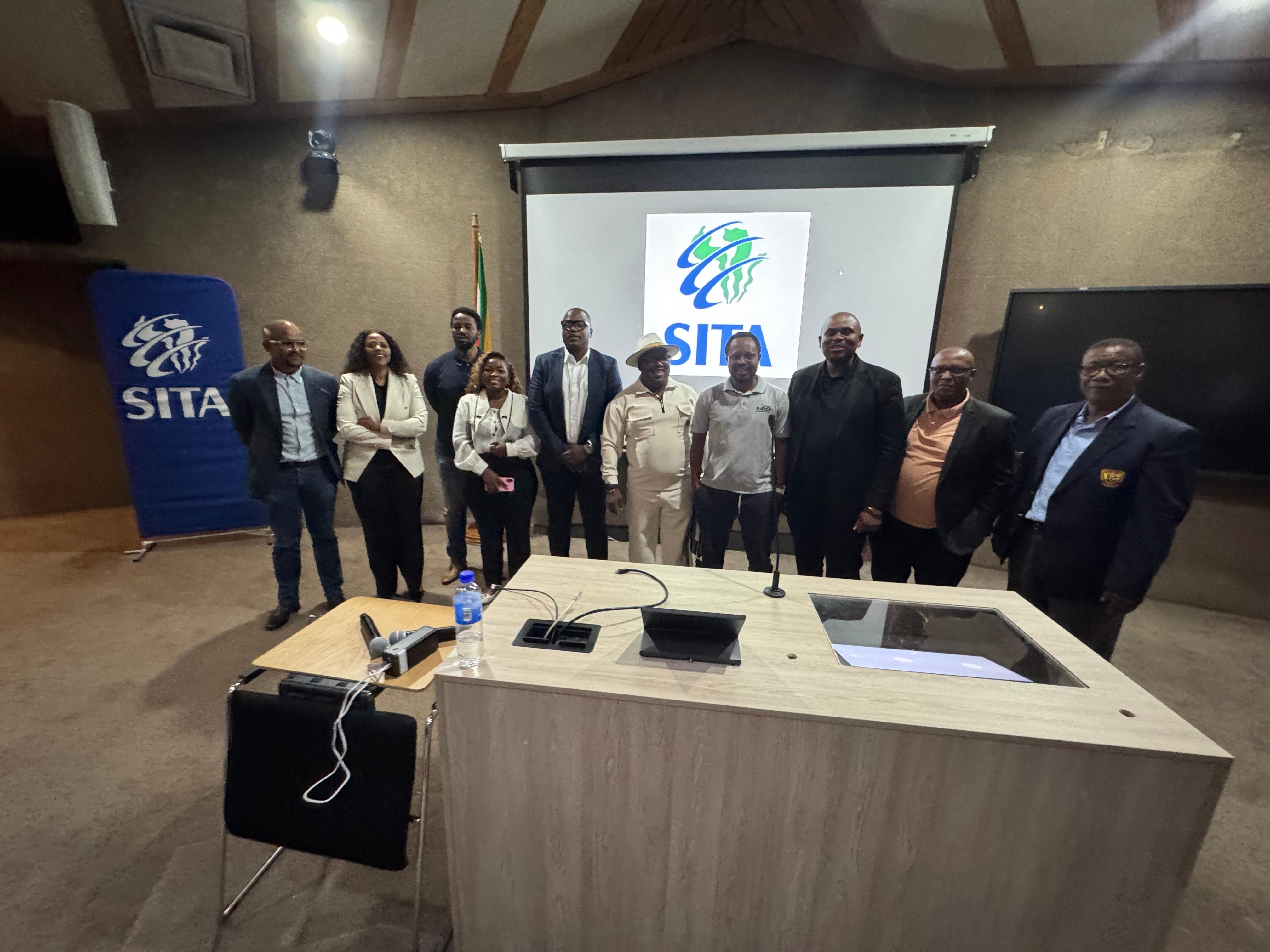
The Progressive Blacks in ICT (PBICT) participated in today’s strategic engagement between the State Information Technology Agency (SITA) and ICT industry associations. The meeting focused on organisational stability, digital transformation, data sovereignty, procurement reform and the meaningful participation of Black-owned, women-owned and emerging ICT enterprises in government’s digital economy.
The PBICT delegation was led by President Welcome Magagula, National Chair William Ledwaba, Deputy Chairlady Jacky Mokakabi and Secretary General (SG) Luvo Grey.
The engagement brought together SITA executives and representatives from PBICT, the ICT SMME Chamber, the Black IT Forum and other industry stakeholders. It provided an important platform for the industry to raise longstanding concerns and contribute towards a more inclusive and effective digital government ecosystem.
Stabilising SITA to support digital government
SITA acknowledged that frequent changes in executive leadership have weakened institutional continuity and affected its ability to implement long-term strategies. The Agency indicated that its complete executive leadership structure is expected to be in place by 1 October 2026.
PBICT welcomes this commitment. Stable leadership is essential to rebuilding confidence, ensuring accountability and preventing strategic programmes from collapsing whenever individual executives leave the organisation.
SITA further reported that the appointment of its new Board contributed to the Agency achieving its first unqualified audit in five years. Its strategic direction is now organised around customer centricity, public-sector transformation, internal transformation, governance and innovation.
The Agency aims to improve customer satisfaction, modernise ageing government systems, automate aspects of supply-chain management and position itself as a strategic enabler of government—not merely a provider of technology.
Data sovereignty must mean South African ownership
During the engagement, PBICT Secretary General Luvo Grey raised the importance of developing sovereign, locally owned digital infrastructure.
PBICT’s position is that data sovereignty cannot be limited to storing government information within South Africa while the underlying hyperscale infrastructure, platforms and operational capabilities remain controlled by foreign multinational corporations.
South Africa must develop its own hyperscale data centres, cloud capabilities, cybersecurity infrastructure and technical intellectual property. Localisation must extend beyond geography and include ownership, control, skills and participation across the complete technology value chain.
The discussion also covered hybrid cloud models, security operations centres, standardised government architectures and the establishment of secure application programming interfaces through which government data could support innovation and economic development while remaining appropriately protected.
PBICT welcomes SITA’s intention to appoint a Chief Digital Officer, collaborate with institutions such as the CSIR and the Technology Innovation Agency, and develop architectural and artificial-intelligence roadmaps. These initiatives must deliberately build South African capacity and create commercial opportunities for local enterprises.
Enterprise development must lead to contracts
SITA presented its Enterprise Supplier Development and Localisation Strategy, which is based on enterprise development, supplier development, preferential procurement, regional procurement and Black industrialisation.
The proposed use of multiple awards on large contracts could reduce the dependence of SMMEs on dominant contractors and address the widespread abuse of smaller businesses through subcontracting arrangements.
PBICT stressed that transformation cannot be measured by the number of entrepreneurs who attend workshops or receive certificates. Experienced Black ICT businesses require direct access to projects, infrastructure, markets and revenue-generating opportunities.
Women-owned ICT enterprises must similarly be placed within intentional commercial pipelines linked to original equipment manufacturers and government demand. Development programmes must have measurable outcomes that move participating companies from training into procurement, implementation and sustainable growth.
SITA also indicated that opportunities could be created by unbundling specialised services within its network, cloud, platform, data-centre and switching-centre operations. These may include complementary technology services, automation, optimisation, infrastructure monitoring and operational support.
The planned establishment of an SMME capacity pool could help government respond more quickly to planned and urgent requirements through clearly defined statements of work. PBICT supports this approach, provided that participation is transparent, accessible and linked to measurable transformation targets.
Procurement reform and transversal contracts
Industry stakeholders raised serious concerns about onerous tender requirements, administrative gatekeeping and the difficulties experienced by smaller companies when using SITA’s procurement platforms.
SITA identified common causes of disqualification, including inaccurate SBD4 declarations, failure to submit supporting evidence for women and youth ownership, non-compliance with administrative requirements and discrepancies in pricing schedules.
While suppliers must comply with legitimate governance requirements, procurement processes must not be so complex that they unintentionally protect established companies and exclude capable emerging enterprises. SITA must balance strong governance with agility, accessibility and the need to support innovation.
SITA provided the following indicative procurement updates and timelines:
- RFB 740, covering PCs and peripherals, is expected to be finalised by 30 November 2026, subject to the investigation of reported technical submission problems.
- RFB 1183, covering IT Services and Skills, is currently under evaluation and is expected to be finalised by 30 November 2026.
- RFB 2003, covering servers and storage, is undergoing the approval process and is expected to be finalised by 30 October 2026.
- The current RFB 2009 contract, covering audio-visual communications, has been extended until 19 April 2027, while the replacement process is being developed.
- RFB 3261, covering Ethernet switches and network solutions, is expected to be finalised by 4 December 2026.
- Classroom and esports solutions, together with CCTV surveillance opportunities, are expected to be advertised in November 2026 and concluded by May 2027.
PBICT will continue monitoring these processes and advocating for fair, transparent and meaningful participation by transformed ICT enterprises.
Institutionalising industry transformation
PBICT, together with other industry associations, called for the re-establishment of a dedicated Industry Transformation Unit within SITA.
Such a structure must have the authority and capacity to monitor transformation, coordinate engagement with industry associations, track SMME participation and report regularly on procurement and enterprise-development outcomes.
Transformation cannot depend on the enthusiasm of individual executives. It must be institutionalised through policy, governance structures, performance indicators and transparent reporting so that progress survives changes in leadership.
PBICT supports the establishment of an ongoing industry engagement structure through which SITA and organised industry can review progress quarterly, resolve implementation challenges and ensure accountability against agreed commitments.
A framework for continued engagement
Due to the scale of the discussions and the contributions received from approximately 60 participants, several agenda items could not be adequately addressed. SITA committed to arranging a follow-up session after the recommendations from the engagement have been consolidated and prioritised.
PBICT welcomes the commitment to develop a structured framework for continued engagement. The next session must move from broad consultation towards specific commitments, responsible officials, implementation deadlines and measurable outcomes.
Today’s meeting represented an important step towards rebuilding cooperation between SITA and the ICT industry. Its success will ultimately be determined by whether the commitments translate into accessible procurement opportunities, locally owned digital infrastructure and sustainable growth for Black-owned and women-owned ICT enterprises.
PBICT remains committed to working with SITA and other industry associations to build a transformed, innovative and sovereign South African digital economy.